Python Exception Handling: try-except Blocks and Custom Errors

Production applications encounter unexpected situations, from unreadable files to dropped network connections. Without robust error handling, unhandled exceptions cause applications to crash instantly. Python exception handling enables software to catch runtime errors gracefully, execute fallback routines, and maintain operational stability. This guide covers try-except blocks, handling multiple exception types, using else and finally clauses, and … Read more


Python OOP Masterclass: Classes, Objects, and Inheritance Explained

As applications grow in scope, structuring code procedurally can lead to unmaintainable codebases. Object-Oriented Programming (OOP) provides a structured paradigm that bundles related data (attributes) and behaviors (methods) into reusable blueprints called classes. This guide covers class definitions, object instantiation, the __init__ constructor, instance vs. class attributes, and extending functionality using inheritance. Key Takeaways 1. … Read more

Python Lists Explained: Creation, Indexing, and Essential Operations

Python Lists and List Operations

Data rarely exists in isolation. When building real-world applications, you need structured ways to store, organize, and manipulate collections of information. Python lists are the most versatile and frequently used built-in data structure in Python, allowing you to store ordered, mutable sequences of elements. This guide explores list creation, zero-based indexing, slicing techniques, and essential … Read more

Python Control Flow Statements: If, Elif, and Else Explained

Python Control Flow Statements

Programs rarely run in a simple straight line. In real-world applications, your code needs to make decisions, execute specific blocks of code based on conditions, and bypass irrelevant steps. Mastering Python control flow statements allows you to build dynamic, decision-making algorithms that react intelligently to changing inputs. This guide covers conditional statements in Python using … Read more

How to Take User Input and Format Output in Python

Python Input and output

Interactive programs require a way to receive data from users and display structured results back to them. In Python, taking user input and formatting output is simple, flexible, and powerful. Mastering Python input and output operations allows you to convert static scripts into dynamic applications that react to user choices in real time. Key Takeaways … Read more

Python Operators Explained: Arithmetic, Logical, and Comparison

Python Operators Explained

Operators are the building blocks of any logic in programming. They allow you to perform calculations, make comparisons, and execute conditional checks in your code. Mastering Python operators is essential for writing dynamic scripts, algorithm design, and handling control flow. This practical guide breaks down the core Python operators—arithmetic, comparison, and logical—with simple code examples … Read more

Understanding Python Variables and Data Types: A Complete Guide

Python Variables and Data Types

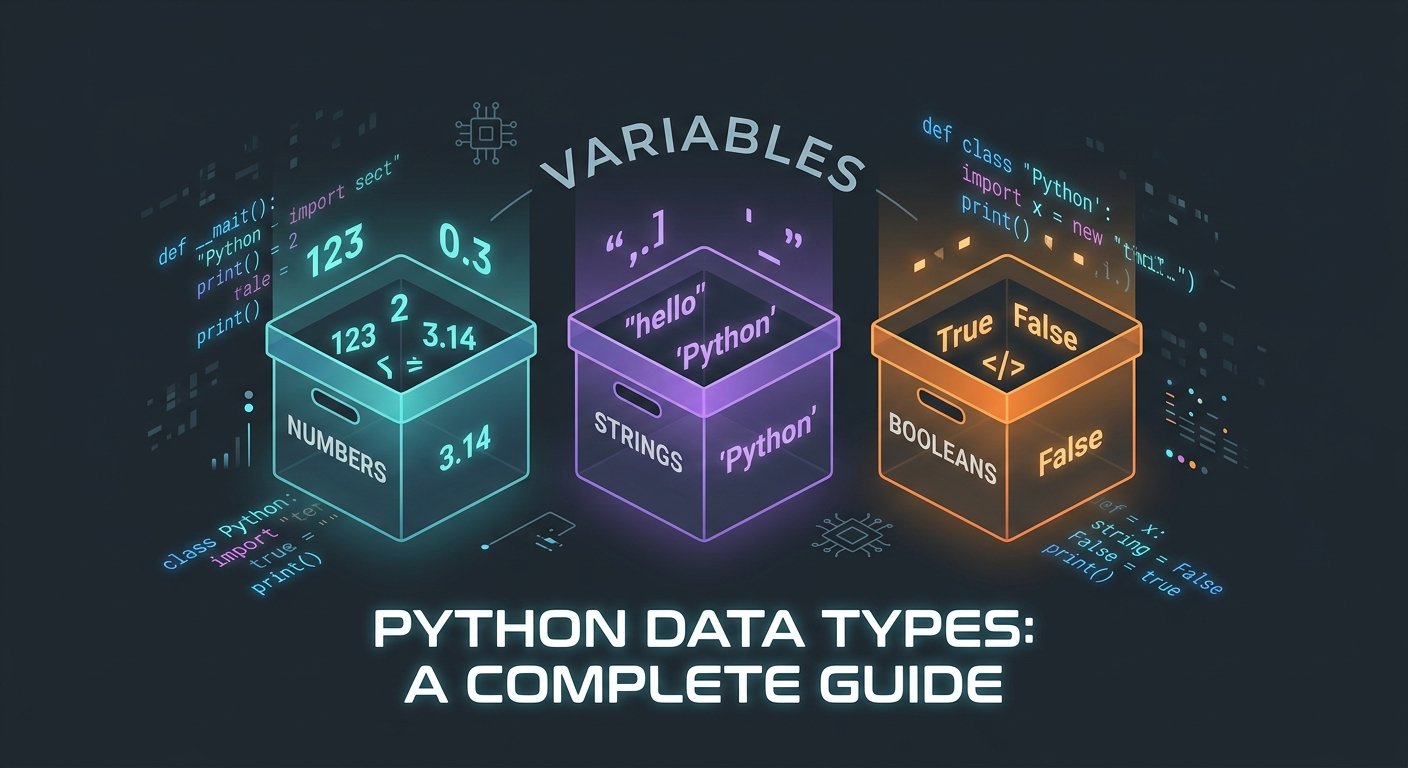
Every program you write relies on storing and manipulating data. In Python, variables act as named containers that hold values, while data types define what kind of data those variables contain. Mastering Python variables and data types is the fundamental first step toward writing efficient, bug-free code. Unlike lower-level languages, Python handles variable creation and … Read more

How to Install Python and Set Up VS Code for Beginners

How to Install Python and Set Up VS Code

etting up your programming environment can feel overwhelming when starting your coding journey. Python is one of the most versatile programming languages in the world, and Visual Studio Code (VS Code) is widely considered the best lightweight code editor available. Knowing how to install Python and set up VS Code correctly from day one will … Read more